


Financial Accountants play an important role in giving organisations, investors and other stakeholders a clear and dependable view of financial performance. The work may centre on statutory accounts, technical accounting and regulatory reporting, but the role often reaches further into controls, audit, systems and the explanation of complex financial information.
This is becoming a broader professional proposition. Organisations still need Financial Accountants who can prepare accurate, compliant accounts, but technology and regulatory change are increasing the value of people who can improve reporting processes, assess data quality and communicate the reasoning behind an accounting treatment.
For you, this creates more than one route forward. You might deepen your technical specialism, move into group or regulatory reporting, gain international experience or use your reporting background as a foundation for controllership and wider finance leadership.
Why do Financial Accountants remain important?
Reliable financial reporting supports trust, scrutiny and informed decision-making. A Financial Accountant may be responsible for:
- Preparing statutory financial statements
- Supporting monthly, quarterly and annual reporting
- Applying UK GAAP or International Financial Reporting Standards
- Managing balance-sheet reconciliations
- Preparing consolidation schedules
- Supporting external audits
- Maintaining accounting records and audit trails
- Reviewing technical accounting treatments
- Improving reporting processes and controls
- Coordinating information across legal entities or jurisdictions
The Financial Reporting Council’s 2025/26 review found that the quality of reporting among FTSE 350 companies had been maintained and that the quality gap between larger listed companies and other companies was narrowing. However, cash-flow statements, financial instruments, asset impairment, fair-value measurement and revenue remained common areas of substantive enquiry. The FRC encouraged organisations to maintain robust review processes and present a consistent, understandable narrative throughout their annual reports and accounts.1
For your career, this reinforces an important distinction. Producing compliant figures matters, but so does being able to demonstrate how you reviewed the underlying assumptions, challenged inconsistencies and helped make the final report clear and dependable.
What do changing reporting requirements mean for Financial Accountants?
Financial reporting changes over time as standards, regulation and stakeholder expectations develop.
The FRC has highlighted several forthcoming areas of change, including IFRS 18, revisions to FRS 102 and Provision 29 of the UK Corporate Governance Code concerning material internal controls. Its latest review also describes high-quality reporting as more than technical compliance, emphasising clear information about strategy, risk and financial performance.1
Companies House reform is changing the wider company-reporting environment too. Identity verification is now a legal requirement for people setting up, running, owning or controlling UK companies, with implementation taking place through a staged transition.2
These developments do not mean every Financial Accountant needs to become an expert in every area. They do suggest that keeping your technical knowledge current remains an important part of progression.
Look for opportunities to build experience in:
- Interpreting new or amended accounting requirements
- Preparing technical accounting papers
- Improving review and sign-off processes
- Working with auditors and specialist advisers
- Explaining accounting judgements and estimates
- Maintaining consistency between financial statements and narrative reporting
- Translating a reporting change into practical process requirements
The career value lies in showing not only that you learned a new requirement, but also how you helped the organisation apply it accurately and proportionately.
Which UK sectors offer Financial Accountant opportunities?
Financial Accountants work across listed groups, private businesses, financial services, public bodies and not-for-profit organisations. The right environment depends on the technical depth, pace and breadth you want from your next move.
Listed companies and multinational groups
A listed or multinational organisation can provide exposure to group consolidation, IFRS reporting, international subsidiaries, intercompany accounting and formal reporting timetables.
You may work with finance teams across several entities or countries, which can strengthen your understanding of:
- Group reporting packages
- Consolidation adjustments
- Foreign currencies
- Intercompany balances
- Technical accounting policies
- Audit coordination
- Controls and reporting deadlines
This environment may suit you if you enjoy detailed reporting work and want to develop experience of larger or more complex group structures.
Before moving, establish how responsibilities are divided between local, regional and group finance teams. A role with a broad title may cover only one specialist part of the reporting process, while another may give you responsibility across several areas.
Financial services
Banks, insurers, investment businesses and other regulated organisations can offer experience of governance, regulatory reporting, financial instruments and intricate control environments.
Technology is also changing how financial services firms manage and analyse information. A joint Bank of England and Financial Conduct Authority survey found that 75% of participating firms were already using AI, while a further 10% planned to use it within three years. Respondents identified data privacy, data quality and data security among the principal risks associated with AI use.3
For a Financial Accountant, this can create valuable experience at the intersection of technical reporting, data governance and professional oversight. It may suit you if you appreciate structured processes and want to strengthen your understanding of risk, evidence and regulatory expectations.
Technology and growing businesses
Technology and rapidly developing businesses can provide experience of recurring revenue, international expansion, investment and evolving finance systems.
The reporting environment may still be maturing, so a Financial Accountant could contribute to:
- Developing accounting policies
- Improving month-end and year-end processes
- Preparing for external audit
- Resolving reporting inconsistencies
- Integrating new entities or systems
- Strengthening balance-sheet controls
- Supporting investment or transaction activity
This kind of role may appeal if you enjoy building and improving processes. It is worth establishing whether the organisation has realistic expectations, appropriate technical support and clear ownership of reporting decisions.
Manufacturing and engineering
Manufacturing and engineering businesses can offer experience of inventory, fixed assets, leases, provisions, capital expenditure and complex group structures.
The role may bring technical accounting closer to operational activity. For example, an impairment assessment, inventory provision or capitalisation judgement may require you to understand information provided by production, procurement or project teams.
This can help you develop the ability to gather evidence from outside finance and explain how operational circumstances affect the financial statements.
Public sector and not-for-profit organisations
Public bodies, charities and educational organisations operate within different reporting, funding and governance frameworks. Roles may provide experience of public accountability, restricted funds, grant income, asset reporting and value-for-money considerations.
This environment may suit you if you want to apply technical accounting knowledge in an organisation where financial reporting is closely connected to stewardship and public or charitable outcomes.
When assessing an opportunity, review the reporting framework used and consider whether sector-specific training will be available.
What is the median Financial Accountant salary in the UK?
Salary is likely to be an important consideration when you are benchmarking your current position or assessing a new role.
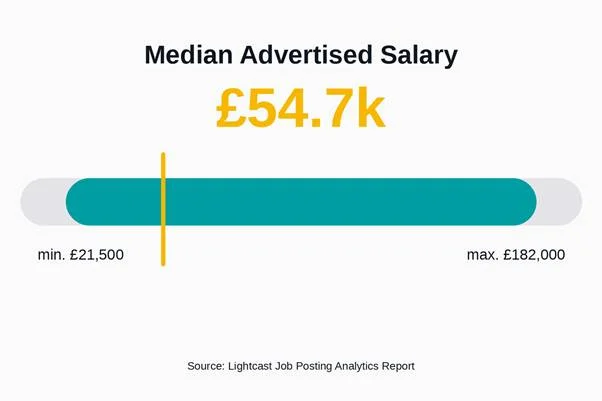
According to Lightcast Job Posting Analytics Report, the median advertised Financial Accountant salary was £54,656.4
Salary information was available for 2,563 of 6,116 matching postings, giving salary visibility for 42% of the vacancies analysed.
Among the postings that disclosed pay:
- 50% advertised salaries of £55,000 or more
- 31% advertised at least £60,500
- 21% advertised £66,000 or more
- 16% advertised at least £71,500
- 13% fell within the broadest and highest band of £77,000 to £182,000
Just over half of the advertised salaries, 51%, were between £44,000 and £60,499. A further 19% advertised salaries below £44,000.
The complete range extended from £21,500 to £182,000. This considerable spread is likely to contain roles with substantially different levels of complexity and responsibility. However, the supplied data does not isolate the effects of location, seniority, sector, qualification status or working hours. The highest band is also particularly broad and should not be interpreted as a typical salary range for the role.
The £54,656 median offers a useful reference point rather than a definitive valuation of your experience. A position involving group consolidation, listed-company reporting, technical accounting papers or responsibility across multiple jurisdictions may differ significantly from a more narrowly focused reporting role.
As 58% of matching postings did not disclose salary information, these findings reflect salary-transparent vacancies rather than the entire UK Financial Accountant market.
What should you consider beyond a Financial Accountant’s base salary?
The value of an opportunity may depend on the technical experience and professional exposure surrounding the salary.
When comparing roles, consider:
- Employer pension contributions
- Annual or long-term bonus arrangements
- Professional subscriptions and continuing development
- Training on new reporting standards
- Exposure to statutory, group or regulatory reporting
- Access to technical accounting specialists
- Responsibility for audit coordination
- International or multi-entity experience
- Systems and transformation projects
- Progression towards Group Accountant, Financial Controller or reporting leadership roles
- Workload and resourcing around year-end
- The quality of the review and sign-off process
It is also worth asking how the organisation manages technical judgements. Will you produce accounting papers and discuss conclusions with senior colleagues and auditors, or mainly compile information determined elsewhere?
Neither model is automatically better. The right choice depends on the experience you want next. If your goal is greater technical depth, access to complex judgements may be valuable. If you want broader leadership experience, ownership of the reporting timetable and coordination across teams may matter more.
A strong opportunity should give you appropriate responsibility alongside access to the information, systems and professional support needed to do the work well.
Which skills are most valuable for Financial Accountants?
Technical accounting and reporting
Knowledge of UK GAAP, IFRS or the relevant sector framework provides the foundation. Useful experience may include consolidations, cash-flow statements, revenue, leases, provisions, impairment and financial instruments.
You do not need equal depth in every area. It is more helpful to show where you have applied a standard, assessed evidence and documented a considered conclusion.
Audit and control awareness
Experience of managing audit requests, maintaining evidence and resolving review points can demonstrate organisation and professional credibility.
The FRC’s latest review highlights robust internal review processes as an important way to identify technical compliance issues before reports are issued.1
Commercial understanding
A reporting judgement rarely exists in isolation. Understanding how the organisation generates revenue, structures contracts, invests in assets and manages risk can help you reach more informed accounting conclusions.
Communication and professional judgement
Financial Accountants need to explain technical matters to colleagues who may not share their accounting background. Clear writing is particularly valuable when preparing accounting papers, audit responses and disclosures.
Data, systems and AI literacy
ACCA and CA ANZ identify data quality, analytical capability and data integration as important foundations for AI-enabled finance. Their research also highlights critical thinking, sceptical validation and contextual storytelling as safeguards against automation bias and unreliable outputs.5
For you, this means understanding how financial data reaches the reporting system, where controls apply and how to investigate unexpected results.
Leadership without a management title
Leadership can include coordinating a reporting timetable, reviewing another person’s work, improving guidance or helping non-finance colleagues provide better information. These examples can demonstrate readiness for broader responsibility even if you do not yet manage a team.
Five ways to strengthen your value as a Financial Accountant
1. Make your technical experience specific
Name the accounting issue, the framework applied, the evidence reviewed and the conclusion reached. This is more informative than saying you “supported statutory reporting”.
2. Build experience across the reporting cycle
Try to understand how source data, journals, consolidation, review, audit and final disclosure connect. Broader visibility can prepare you for greater ownership.
3. Improve the quality of reporting processes
Look for opportunities to strengthen reconciliations, standardise working papers, clarify ownership or reduce repeated review points.
4. Develop your written communication
Practise translating complex accounting matters into concise explanations. A strong technical paper should make the issue, evidence, judgement and conclusion easy to follow.
5. Keep your knowledge current
Maintain a practical record of standards updates, formal learning and new reporting experience. Focus on how changes affect your organisation, rather than collecting knowledge without applying it.
Which career habits may quietly limit progression?
Some habits can make strong technical experience harder to recognise:
- Describing responsibilities without explaining their complexity
- Focusing on compliance without understanding the commercial context
- Relying on audit feedback rather than conducting a thorough internal review
- Remaining within one reporting area without learning how the wider cycle works
- Avoiding difficult judgements or leaving them entirely to others
- Treating systems and data quality as separate from financial reporting
- Keeping technical knowledge within finance rather than explaining it accessibly
- Choosing a new role for title alone without examining the reporting exposure
None of these is permanent. Progress may begin with taking ownership of a technical paper, joining a systems project or asking to observe a more complex reporting discussion.
How are AI and automation changing Financial Accountant roles?
Technology can support data extraction, reconciliations, anomaly detection, disclosure comparison and the initial preparation of reporting commentary.
ACCA and CA ANZ report that AI is changing descriptive, diagnostic, predictive and prescriptive finance work. Their research says AI can improve productivity, while concerns remain around reliability, trustworthiness and explainability.5
For Financial Accountants, professional judgement remains important. An automated tool may identify a movement or suggest an explanation, but someone still needs to assess whether the data is complete, the accounting treatment is appropriate and the narrative is consistent with the evidence.
Valuable AI-related capabilities include:
- Checking source data and assumptions
- Recognising incomplete or implausible outputs
- Maintaining an appropriate audit trail
- Applying confidentiality and access controls
- Reviewing AI-generated commentary critically
- Knowing when specialist advice is required
- Retaining clear human accountability
The opportunity is not simply to produce reports faster. It is to use technology thoughtfully while protecting reporting quality.
Key takeaways for Financial Accountants
- Strong reporting and technical accounting knowledge remain central to the role.
- Current FRC priorities reinforce the value of robust review, coherent reporting and clearly explained judgements.
- Technical exposure, audit responsibility and reporting complexity can add value beyond base salary.
- Commercial understanding and clear communication can make technical expertise more useful.
- Data quality, systems knowledge and critical evaluation are increasingly relevant as automation develops.
- A valuable next move should deepen your expertise, broaden your ownership or move you closer to the career direction you want.
Considering your next Financial Accountant role?
If you are beginning to explore what could come next, Tate can help you review current Financial Accountant and wider finance opportunities and identify roles aligned with your experience and priorities.
You can browse Tate’s current finance jobs or register with Tate’s talent network for relevant opportunities. If you would prefer to discuss your options first, contact a Tate recruitment specialist can help you think through the technical exposure, sector, working arrangements and progression route that matter to you.
You do not need to make an immediate move. Sometimes the most valuable first step is understanding which parts of your experience are already strong and which opportunity could give you the reporting depth, ownership or leadership exposure you want next.
References
- Financial Reporting Council (2026) Annual Review of Corporate Reporting 2025/26. Available at: https://www.frc.org.uk/news-and-events/news/2026/09/annual-review-recognises-continued-high-standards-of-corporate-reporting/
- Companies House (n.d.) Identity verification for Companies House. Available at: https://www.gov.uk/government/collections/identity-verification-for-companies-house
- Bank of England (2024) Artificial intelligence in UK financial services. Available at: https://www.bankofengland.co.uk/report/2024/artificial-intelligence-in-uk-financial-services-2024
- Lightcast (n.d.) Job Posting Analytics Report.
- ACCA and CA ANZ (2026) Bridging skills and data gaps for AI-enabled finance. Available at: https://www.accaglobal.com/policy-and-insights/reports/2026/enabling-finance-insight.html